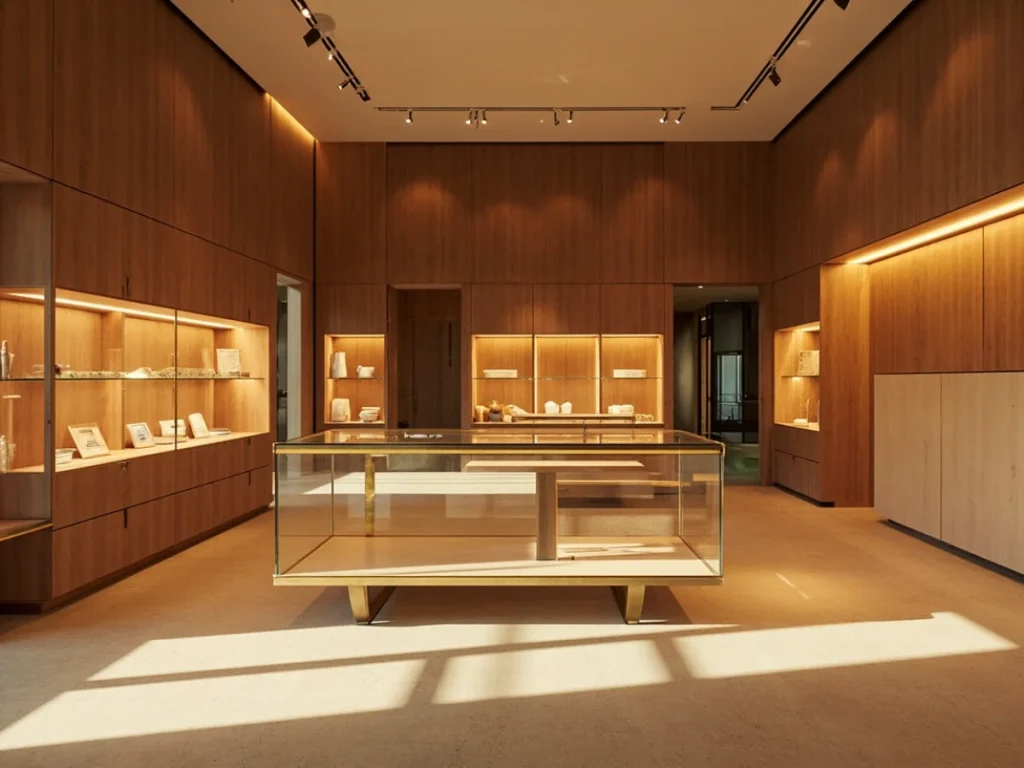
A turnkey jewelry store fit-out is a single-contract approach to building or renovating a retail jewelry space: one partner handles design, manufacturing, logistics, and on-site installation, then hands you the keys to a store that is ready to open. Instead of coordinating an interior designer, a millwork shop, a lighting contractor, a glass supplier, and an electrician yourself, you deal with one team that is contractually responsible for the finished result. For store owners, that reduces risk. For brands rolling out multiple locations, it reduces variance between stores. This guide explains what is actually included in a turnkey jewelry store fit-out, what it costs, how long it takes, and how to evaluate a supplier before you sign.
What a Turnkey Jewelry Store Fit-Out Actually Includes
The word “turnkey” is often stretched, so it helps to define scope in writing. A genuine turnkey jewelry store fit-out typically covers five workstreams:
- Design and space planning — concept drawings, 3D renderings, layout for customer flow, and shop drawings for every fixture.
- Fixture manufacturing — display cases, wall units, counters, towers, and back-of-house storage, usually built from MDF, metal, glass, and LED lighting.
- Lighting design and supply — 3000K–4000K LED with high CRI (90+) so diamonds and gold render accurately without color shift.
- Logistics and customs — crating, shipping, export documentation, and delivery to site.
- Installation and handover — on-site assembly, leveling, electrical tie-in, and a punch-list walkthrough.
What is usually not included: base building construction, HVAC, flooring, ceilings, security systems, and local permits — though a good turnkey partner will coordinate with the contractors who handle them.
Typical Costs and Timelines
Costs vary widely by market and spec level, but here are realistic ranges based on projects exported to 30+ countries. For a 60–100 m² store, a mid-range turnkey jewelry store fit-out typically runs USD 450–900 per square meter for fixtures and lighting alone, with full fit-out (including ceilings, floors, and electromechanical work) reaching USD 1,200–2,000 per square meter. A flagship with custom millwork, stone counters, and bespoke display cases can exceed that.
Timelines, from design approval to store opening, usually look like this:
- Concept and design: 2–3 weeks
- Shop drawings and client approval: 1–2 weeks
- Manufacturing: 4–6 weeks
- Shipping and customs: 2–5 weeks depending on destination
- Installation: 1–3 weeks
Total: roughly 10–18 weeks for a single store. Multi-store rollouts save time because designs are reused; the second and third stores can often be manufactured in parallel.
Why Turnkey Beats Managing Separate Vendors
The main advantage is single-point accountability. If a display case arrives with a scratched glass panel or a door misaligned, there is no debate between the glass supplier and the cabinet maker — one company owns the fix. That matters in jewelry retail, where a damaged case can delay opening by weeks.
Turnkey also helps with design consistency. When the same team designs and builds the fixtures, details like drawer glide tolerances, LED color temperature, and counter heights stay consistent across stores. For franchise models and multi-location brands, that consistency is a brand asset, not just a convenience.
Finally, turnkey simplifies budgeting. A fixed-scope quote means you know the total cost before manufacturing starts, rather than discovering change orders mid-installation.
How to Choose a Turnkey Fit-Out Partner
Ask these questions before signing:
- Can they show photos of completed jewelry or watch retail projects, not just generic millwork?
- Do they manufacture in-house, or subcontract? In-house usually means better quality control and faster fixes.
- What is their export experience? Customs documentation and crating for international delivery are common failure points.
- Will they provide a detailed fixture schedule, lighting spec, and installation drawing set?
- What is the warranty on LED drivers, hardware, and glass?
- Who is your single point of contact during installation?
A supplier without a portfolio of retail jewelry environments is a risk, even if their price is lower. Quality of finish, lighting accuracy, and security details are specific to this sector.
Common Misunderstandings About Turnkey Fit-Outs
“Turnkey means I don’t need to be involved.” Not true. You still need to approve design, lighting, and materials. The difference is that you approve once rather than coordinate daily.
“Turnkey is always more expensive.” It can be, but often it is not. One contract removes the coordination overhead, reduces rework, and avoids the markups each separate vendor adds for managing others.
“It works the same for every country.” Electrical standards, fire codes, and glass thickness requirements differ by market. A supplier with export experience will adapt specs to local code rather than shipping a one-size-fits-all kit.
If you are planning a new jewelry store or a multi-location rollout, the fastest way to get a real number is to share your floor plan and a rough idea of your brand look. Libafang Showcase Co., Ltd. provides design, manufacturing, and installation for jewelry, watch, and museum retail worldwide, and can return a free design concept and quote within a few business days. Send us your project details to get started.