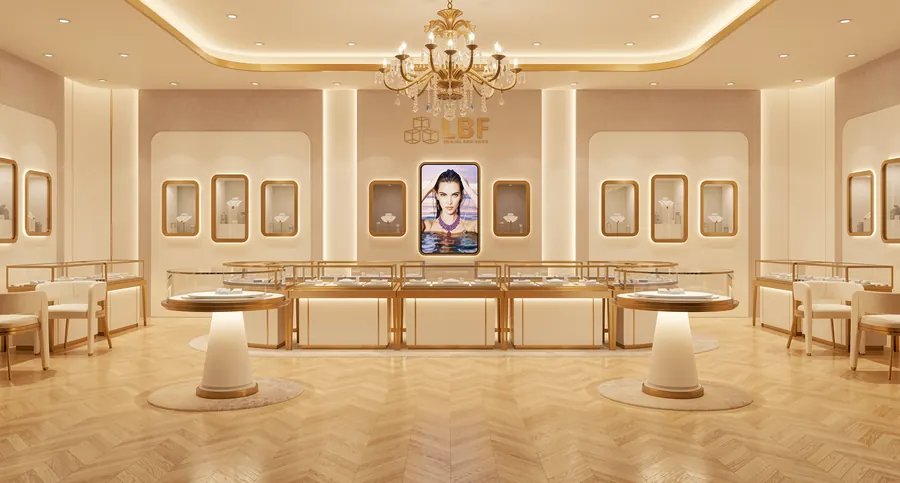
Most display showcase projects fail for the same handful of reasons: unclear briefs, drawings that do not match manufacturing reality, lead times that collapse in the final two weeks, or damage discovered after a container has already crossed an ocean. None of these are design problems. They are process problems. After completing hundreds of custom showcase projects for jewelry stores, watch boutiques, museums and luxury retail clients in more than 30 countries, we have refined our showcase project workflow into six stages that keep quality, cost and timing predictable. Here is exactly how that workflow runs, including the numbers behind each stage.
Step 1: Brief, Site Data and Quotation
Everything starts with a structured brief, not a phone call. We ask for five essentials: showcase dimensions or an architectural drawing of the space, the product type and average item size, lighting requirements, security level, and target budget range. Customers who send a floor plan and a Pinterest board but no dimensions usually lose two to three weeks in back-and-forth. Sending measured drawings cuts that to 24-48 hours.
Within 1-2 business days of receiving a complete brief, we return a written quotation with an itemized bill of materials: sheet metal thickness, glass type, LED specification, hardware brand, packaging method and estimated freight volume. That last figure matters more than most buyers expect — a showcase that ships fully assembled can cost 2-3 times more in freight than a knock-down version, so we present both options with real numbers.
Step 2: 3D Design and Approval
Once the quote is accepted, our design team produces 3D renderings, usually within 3-5 working days. You receive perspective views, an elevation view for dimensional checking, and a material board so you know exactly which metal finish and glass you are approving. Standard iterations are unlimited within the original brief, and most projects go through two or three rounds.
This stage is where critical decisions get locked in: corner radius, lock placement, drawer travel, glass thickness (typically 6mm to 10mm tempered), and LED color temperature (3000K for warm jewelry tones, 4000K for watch and tech retail). Changing any of these after production begins is expensive and slow. We do not release a project to the factory floor without a signed drawing approval — a single scanned signature or formal email reply is enough.
Step 3: Sampling (Optional but Recommended)
For first-time orders, high-value pieces, or complex finishes such as brushed brass or powder-coated color matching, we recommend a physical sample or a 1:1 prototype. A single prototype showcase typically takes 10-15 working days and costs 15-30% of the unit price, with the cost often credited back against the bulk order. For simple, repeated designs, sampling can be skipped to save time.
Step 4: Production and In-line Quality Control
After deposit payment — 30% is our standard, with 70% before shipment — production begins. Lead times vary by complexity:
- Standard glass showcases (metal frame, LED, lock): 20-25 working days
- Custom wood and metal hotel or museum cases: 30-40 working days
- Full-store rollouts with 20+ units: 40-55 working days
During production we run three checkpoints: material inspection on arrival at the workshop, frame and fit checks before glass installation, and a lighting electrical test on every unit. This keeps reject rates below 2%, compared with the 8-10% we see on projects sourced without in-line QC.
Step 5: Pre-Shipment Inspection and Packaging
Before anything is packed, every showcase is assembled, lit, photographed and inspected against the approved drawing. We send photo and video evidence for approval, and third-party inspection (SGS, BV, Intertek) can be arranged if required. Glass is protected with edge foam and corner guards; frames are wrapped in PE film and EPE foam; units are then crated with plywood and steel strapping for sea freight, or packed into reinforced cartons for air freight. Tops and bases ship separately where it reduces freight cost without affecting assembly.
Step 6: Shipping, Installation Guidance and After-Sales
We ship to port or door-to-door depending on destination. Freight to North America typically takes 25-35 days by sea and 7-10 days by air; Europe and Australia run 30-40 days by sea. With every shipment goes a packing list, exploded assembly drawing, installation manual and an electrical wiring diagram. In the past twelve months, roughly 60% of our clients assemble showcases themselves using these documents and online video support; for larger rollouts, we can send an installation technician or arrange a local partner. Every showcase carries a 2-year warranty on structure and hardware, with spare LED modules and locks available for the life of the product.
Why a Fixed Workflow Matters
A defined workflow is not bureaucracy. It is the difference between a project that ships on schedule and one that stalls at the sample stage for a month. Because Libafang controls design, production, QC and shipping in one facility in Guangzhou, information does not get lost between vendors. We have built the same six steps for every order size, from a single countertop case to a 200-unit museum rollout. If you want to see how it applies to your store, send us your drawings, quantities and target date.
Request a Free Design and Quote
Share your floor plan, sizes, quantity and budget range, and our team will return a 3D concept and itemized quotation within 1-2 business days — no obligation, no cost. Give us your brief, and we will give you a clear timeline from drawing approval to delivery.