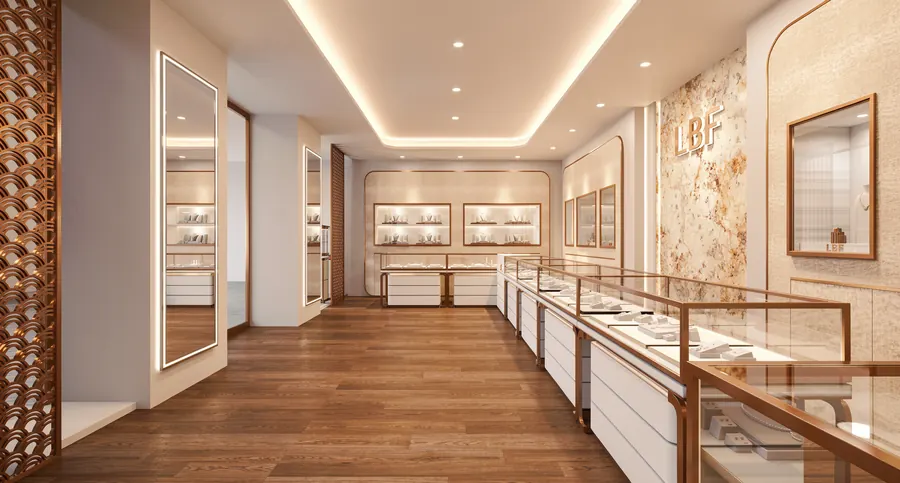
LED lighting has become the standard for display cabinets in jewelry stores, watch boutiques, museums, and luxury retail. It runs cool, uses little power, and makes diamonds sparkle. But even the best LEDs dim over time. How long they last depends on quality, heat management, and maintenance. This article explains what affects LED lifespan and offers practical steps to keep your display cabinet LED maintenance on track—protecting both your investment and your brand image.
Understanding LED Lifespan: What the Numbers Really Mean
LED manufacturers rate lifespan in hours, typically 25,000 to 50,000 hours for quality display lighting. That sounds like decades, but the rating is not “time until failure.” It’s time until light output drops to 70% of initial brightness (called L70). In a retail environment where cabinets run 12 hours a day, 25,000 hours equals about 5.7 years; 50,000 hours stretches to 11.4 years. However, real-world conditions often shorten that. Heat, dust, voltage fluctuations, and poor drivers can cut lifespan by 30–50%. So a “50,000-hour” LED might only deliver acceptable brightness for 3–4 years if neglected.
Key Factors That Shorten LED Lifespan in Display Cabinets
Display cabinets are tight, enclosed spaces. LEDs generate heat at the emitter, and if that heat can’t escape, junction temperature rises. Every 10°C increase above 25°C can halve an LED’s useful life. Other culprits include:
- Heat buildup: Poor ventilation or blocked vents trap heat, accelerating lumen depreciation.
- Dust and debris: Dust on lenses or heat sinks insulates components, reducing cooling efficiency.
- Voltage spikes: Unstable power or cheap drivers stress LEDs and shorten life.
- Moisture: Humidity corrodes electrical contacts and damages phosphor coatings.
- Physical damage: Scratched lenses or bent strips from rough handling.
If your cabinets are near HVAC vents, direct sunlight, or in busy foot-traffic areas, risk increases. Knowing these factors is half the battle.
Practical Maintenance Tips for Display Cabinet LED Lighting
You don’t need a lighting engineer to extend LED life. A simple maintenance routine—done quarterly or at least twice a year—makes a big difference. Follow this schedule:
- Inspect and clean: Turn off power. Use a soft, lint-free cloth slightly dampened with distilled water (never solvents) to wipe LED lenses and diffusers. For heat sinks, use a can of compressed air to blow out dust. Avoid touching the LED chip itself.
- Check connections: Look for loose plugs, frayed wires, or corrosion at terminals. Tighten or replace as needed. Use dielectric grease on exposed contacts in humid climates.
- Monitor brightness: Compare illuminated cabinets side by side. If one looks noticeably dimmer, measure with a lux meter (or phone app). A 10–15% drop means replacement may be near.
- Verify cooling: Ensure vents are unobstructed and fans (if present) spin freely. Vacuum dust from fan blades and intake grilles.
- Test drivers: Use a multimeter to check output voltage. Replace drivers that drift beyond 10% of rated voltage. A failing driver is a common cause of LED flicker or premature death.
- Replace in batches: If one LED fails, replace all units in that cabinet circuit—LEDs of different ages have different color and brightness, which can look inconsistent.
Log these checks with dates and findings. It turns maintenance into a predictable cost, not an emergency.
Choose the Right LEDs and Drivers from the Start
Prevention beats repair. When specifying display cabinets, insist on LEDs with a Color Rendering Index (CRI) of 90+ and a rated life of at least 50,000 hours. Look for brands that publish LM-80 test data and TM-21 projections. Drivers should be constant-current type with overvoltage and overheat protection. For high-end jewelry or watch displays, use LEDs with a low junction temperature (below 85°C at maximum drive current). If you’re buying from Libafang, we can supply cabinets with integrated thermal management—aluminum heat sinks, ventilated channels, and remote drivers—so LEDs run cooler and last longer.
When to Replace LED Strips or Modules
Don’t wait for a blackout. Plan replacement when light output drops below 80% of original or when color shift becomes visible (e.g., whites turn yellow or blue). For a jewelry store running 10 hours a day, budget for replacement every 6–8 years with quality components, or 3–4 years with budget LEDs. Keep spare modules on hand—matching color temperature and bin code is easier when you buy extras upfront. Also, consider upgrading to newer, more efficient LEDs at replacement time; you’ll get better light for less energy.
Preventive Maintenance Saves Money and Protects Your Brand
Dim or flickering display lighting makes even fine jewelry look dull. It also signals neglect to customers. A disciplined display cabinet LED maintenance program cuts energy waste, reduces emergency repairs, and keeps your merchandise looking its best. Set a calendar reminder, train staff on basic cleaning, and keep a small spares kit. For complex or high-value cabinets, schedule an annual professional inspection.
If you’re sourcing new display cabinets or need replacement LED modules, Libafang Showcase Co., Ltd. can help. We manufacture custom display showcases for jewelry, watches, museums, and luxury retail, exporting to over 30 countries. Our team can design cabinets with optimized LED cooling and easy-access maintenance features.
Ready to upgrade your display lighting? Request a free design and quote today. Tell us your cabinet size, lighting requirements, and location—we’ll respond within one business day with a tailored solution.