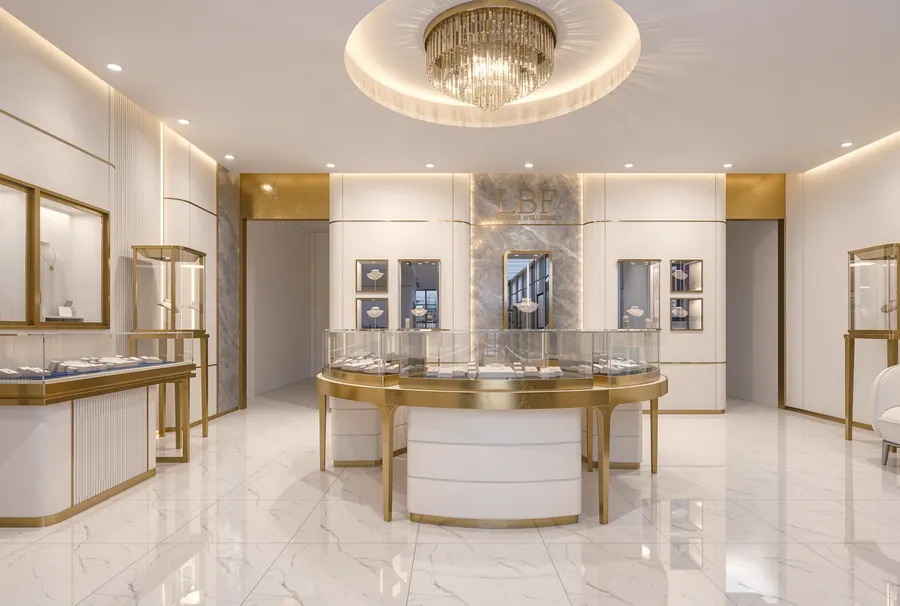
A visit to a guangzhou showcase factory is not a showroom tour. At a serious manufacturing partner, you will see steel being cut, glass being polished and LEDs being wired before any finished display case ever reaches a client’s sales floor. If you are sourcing jewelry, watch or museum showcases, understanding what happens between order confirmation and container loading tells you more about quality than any catalog photograph. This article walks you through what you should expect to see on a typical factory visit, including the stations, tolerances and tests that separate a reliable supplier from a trading office with a rented warehouse.
Before You Arrive: A Tour That Takes Two to Three Hours
A well-run showcase factory occupies 3,000 to 8,000 square meters and employs 60 to 150 people, with production organized in a straight line: raw material storage, cutting, welding and forming, surface finishing, painting or plating, assembly, electrical work, quality control, packing and loading. A meaningful walkthrough of that flow takes two to three hours, longer if you want to inspect incoming material or review a sample under working lights. Ask for the visit to be scheduled during production hours, not on a quiet afternoon when machines are idle.
Bring three things: the drawings or 3D renderings of your project, a sample of your store’s existing fixtures if you have one, and a color reference under the lighting you actually use. Factory lighting is usually 4,000K to 6,000K white, so a finish approved on the shop floor can look different in a warm retail interior.
Station 1: Sheet Metal, Cutting and Frame Forming
The first stop is usually the metal area, where frames are built from cold-rolled steel, stainless steel or aluminum. Look for thickness declarations you can verify. Structural frames for a display case are commonly 1.0 mm to 1.5 mm cold-rolled steel, while decorative stainless elements run 0.8 mm to 1.2 mm. A factory that keeps measuring calipers at each workstation is easier to audit than one where thickness is only stated on paper.
CNC laser cutting handles the base plates, mounting brackets and acrylic or stainless trim. On a typical tour you will see the nesting software screens, the scrap bins and the tolerance records. For luxury retail, a frame squareness tolerance of ±0.5 mm across a 1,200 mm case is a realistic benchmark. Ask to see how offcuts are tracked; low scrap rates usually indicate disciplined programming.
Station 2: Welding, Grinding and Surface Preparation
The welding bay is where you learn the most about consistency. MIG welding is common for steel frames, TIG for stainless steel where weld marks must disappear. A clean shop keeps jigs and fixtures organized so that identical cases come out identical, case after case. Inspect three parts from the same batch: if the weld beads, radii and corner joints differ noticeably, that variance will show up in a store with ten matching counters.
Grinding and polishing follow. For high-gloss stainless, hand polishing can take 20 to 40 minutes per linear meter depending on the profile. Under strong light, look for swirl marks and sanding lines that only appear at certain angles. This is also the stage where you can ask how the factory protects surfaces during the rest of the process, since scratches on polished steel are the most common complaint at final inspection.
Station 3: Painting, Plating and Color Matching
Finishing decides whether a showcase looks premium in a boutique. Powder coating, baking paint, electroplating (gold, rose gold, champagne, black titanium) and PVD coatings cover most requests. Ask two things: the coating thickness and the durability standard behind it. Powder coating for retail fixtures is often 60 to 100 microns, and quality plants test adhesion with a cross-hatch or bending test rather than judging by eye.
Color matching should be done under the real retail lighting — 3,000K warm white for jewelry, 4,000K neutral for watches and museums. A neutral-density light booth plus a physical sample button approved by you prevents the classic dispute where gold looks green, or champagne looks beige, once the cases arrive.
Station 4: Glass, Acrylic and Assembly
Display cases are only as good as the transparent parts. You should see tempered glass or low-iron glass cutting, edge polishing and, where required, UV bonding. Common specifications include 6 mm, 8 mm or 10 mm tempered glass for panels, with low-iron glass used when color accuracy of the displayed product matters. Laminated glass at 6.38 mm or 8.38 mm appears in museum and high-security work.
Assembly is where you check gaps, alignment, hardware and door action. Open and close drawers and doors yourself. A sliding drawer at this stage should move with controlled resistance, not rattle or drift. Hinges, locks and corner brackets should be branded or at least traceable. Watch how the team handles acrylic: protective film should stay on until the last possible step, and dust control matters more than most buyers realize.
Station 5: Lighting, Electrical Testing and Aging
Lighting is the difference between a plain box and a jewelry showcase. Wiring in a serious plant uses defined standards: low-voltage LED strips commonly run on 12V or 24V through IP-rated connectors, separated from mains power. Every channel should be tested for consistent color temperature and brightness before closing.
Aging or burn-in tests typically run 12 to 24 hours, sometimes 48 hours for large projects. During the tour, ask to see the test log, the color temperature measurement tool and how failed drivers or flickering strips are documented. This single station reveals more about after-sales risk than any warranty sentence — jewelry store lighting often runs 10 to 12 hours a day, so heat management and driver quality decide your maintenance costs.
Station 6: Quality Control, Packing and Loading
Final inspection should follow a written checklist, not a verbal one. Expect a factory to photograph each piece, log dimensions, verify glass condition, count hardware accessories and confirm the finish color against the approved sample. Ask what the rejection rate is; a plant shipping thousands of cases a year will usually report a final inspection pass rate above 97%.
Export packing matters when cases travel to 30 or more countries. A standard sequence includes:
- Clean the case, remove protective film from viewing surfaces, and label each component.
- Wrap glass and polished panels in pearl cotton or foam plus corner protectors.
- Place the case in a custom-molded foam tray to stop movement inside the box.
- Use 5-layer or 7-layer corrugated cartons with strapping and edge guards.
- Add humidity indicator and desiccant packets for sea freight.
- Stretch-wrap and strap cartons onto export pallets or load directly into the container with bracing.
Watch the packing area for order segregation. Mixed-up hardware for a 40-case hotel or museum order causes installation delays that cost far more than the fixtures themselves. Before leaving, confirm lead times in writing: stock-format cases may ship in 15 to 25 days, while fully custom projects with samples and approval rounds commonly need 30 to 45 days plus transit.
If you visit Libafang in Guangzhou, you can see these stations in sequence for your own project, including material samples, lighting demonstrations and packing requirements for your destination. Send your drawings or reference photos and receive a free design and quote before you travel — then come see exactly how the case you order gets built.