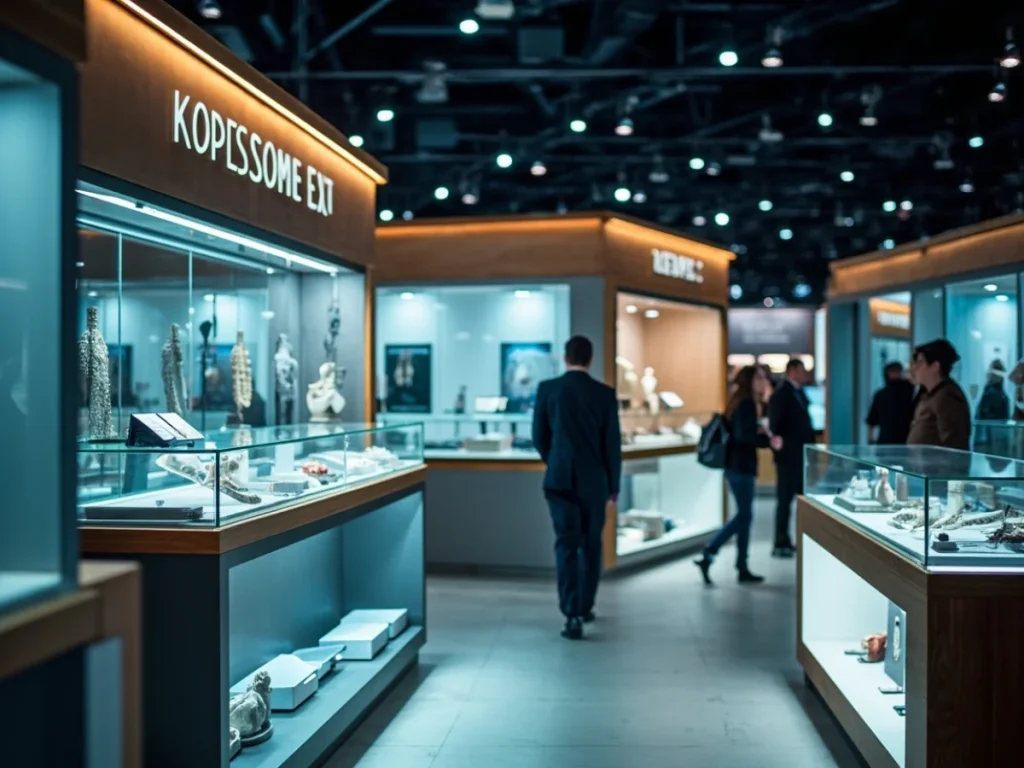
Importing display showcases from China can cut costs by 30–50% compared to domestic production in North America or Europe, but only if you choose the right manufacturing partner. A poorly made jewelry case with misaligned glass or failing LED drivers can damage your brand and cost more in returns than you saved. Whether you need 50 units for a boutique rollout or 500 custom museum vitrines, the selection process follows a clear framework. Use the steps below to separate professional showcase manufacturers from trading companies and workshops that cannot deliver consistent quality.
1. Verify the Factory, Not Just the Website
Many suppliers present themselves as factories but are actually trading companies that outsource production. This adds 15–25% to your cost and reduces quality control. Ask for the business license and check the registered capital and scope. A legitimate manufacturer typically has at least 3,000 square meters of production space and 50+ workers. Request a live video tour showing the cutting, edge-polishing, welding, painting, and assembly areas. Look for specialized equipment like CNC glass cutting machines, edge grinding lines, and dust-free painting booths. If the supplier hesitates or shows only a warehouse, look elsewhere. Libafang operates a 6,000-square-meter factory in Guangzhou with dedicated lines for wood, metal, glass, and lighting, so we encourage clients to audit us the same way.
2. Assess Material Quality and Sourcing
Good showcases start with good materials. Specify or verify the following:
- Glass: Low-iron ultra-clear glass with 91%+ light transmission. Standard clear glass has a green tint that distorts gemstone colors. Tempered glass should meet EN 12150 or ANSI Z97.1 for safety.
- Lighting: CRI (Color Rendering Index) of 90+ and a color temperature of 3000K–4000K for jewelry; 2700K–3000K for watches. LED drivers should be branded (Mean Well, Philips) with a 3–5 year warranty.
- Hardware: Stainless steel 304 or 316 for corrosion resistance; zinc alloy locks from reliable makers. Avoid cheap brass-plated zinc that tarnishes within months.
- Wood and finishes: E1 or E0 grade MDF for low formaldehyde. PU or lacquer finishes should be at least 3 coats with a matte or high-gloss sheen that resists scratching.
- Adhesives and seals: Neutral-cure silicone that does not yellow or emit acetic acid, which can corrode metal parts.
Ask for material certificates and a small sample if possible. A manufacturer confident in its supply chain will provide them without delay.
3. Evaluate Craftsmanship Through Samples and Past Projects
Photos on a website can hide gaps, uneven edges, and squeaky hinges. Request a physical sample or a video inspection of a finished unit. Pay attention to:
- Seamless joints between metal and glass
- Consistent gaps (0.5–1.0 mm) around doors and drawers
- Smooth drawer slides rated for 50,000+ cycles
- No dust or bubbles trapped under glass
- Even paint thickness and no orange-peel texture
Also review their portfolio. A manufacturer with experience in jewelry, watches, and museums understands the nuances of security, lighting, and aesthetics. If they mainly produce shop fittings or general display racks, they may not meet luxury standards.
4. Check Certifications and Compliance
Depending on your market, your showcases must comply with local regulations. Key certifications to verify include:
- ISO 9001 for quality management
- CE and RoHS for electrical components in the EU
- UL or ETL for lighting and wiring in the US and Canada
- FSC certification for wood products
- REACH and Prop 65 for chemical safety
A reliable manufacturer will have these documents ready and can customize to meet specific standards. For museums, they may also need to meet fire ratings (e.g., Class A or B) and security glazing requirements.
5. Clarify Communication, Lead Times, and After-Sales
Delays and miscommunications are common when working with overseas suppliers. Establish clear expectations from the start:
- Response time: A good team replies within 24 hours on business days.
- Lead time: Standard production is 25–35 days after deposit and drawing approval. Custom projects can take 45–60 days. Add 7–10 days for sea freight to Europe or 25–35 days to the US.
- Payment terms: 30–50% deposit, balance before shipment. Be cautious of suppliers demanding 100% upfront.
- Warranty: At least 2 years on structure and 3 years on LED lighting.
- Spare parts: Availability of locks, hinges, and LED drivers for at least 5 years.
Ask for a detailed production schedule and每周 updates. If a supplier cannot provide a clear timeline, they likely cannot manage a complex project.
6. Compare Quotes Fairly and Visit If Possible
Do not choose based solely on the lowest price. A quote that is 20% cheaper often uses thinner glass, lower-grade LEDs, or fewer quality checks. Ask for a breakdown of materials, labor, packaging, and shipping. Compare apples to apples: same glass thickness, same LED brand, same hardware finish. If your order value exceeds $30,000, consider an in-person factory visit or hire a third-party inspection service like SGS or Bureau Veritas for a pre-shipment inspection. This costs $300–$600 and can save you thousands in defective goods.
At Libafang, we provide full material specs, production videos, and third-party inspection coordination as standard. Our export team has shipped to 30+ countries, so we understand the documentation and packaging needed to clear customs smoothly.
Conclusion
Choosing a reliable showcase manufacturer in China is a process of verification, not just negotiation. Check the factory, test the materials, review certifications, and demand clear communication. The right partner will not only meet your budget but also protect your brand for years. If you are ready to source custom display cases for jewelry, watches, or museums, request a free design and quote from Libafang. We will respond within 24 hours with a detailed proposal and a sample plan.