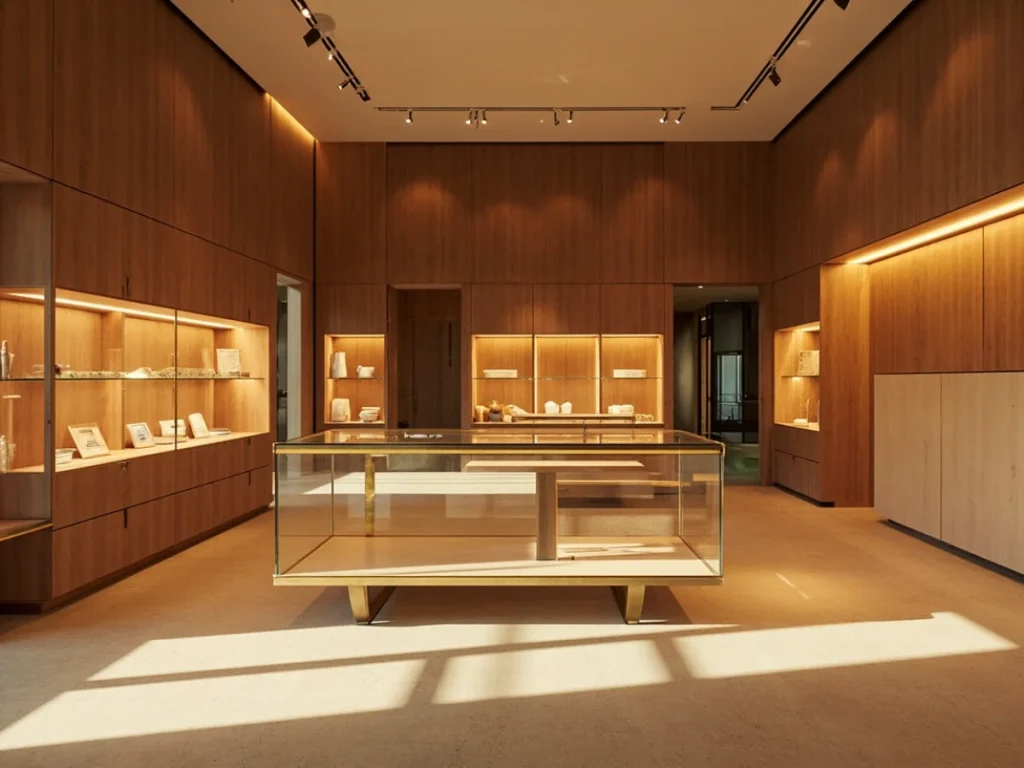
Jewelry store design is entering a measurable decade. In 2025, global jewelry retail spend passed $350 billion, and shoppers now visit a physical store for a reason — trust, tactile inspection and ceremony. The interiors and display cases you install in the next two years will serve until the early 2030s. That makes 2027 a strategic deadline, not a cosmetic one. Below are ten trends worth building into your next fit-out, with the specifications and numbers that turn a mood board into a purchase order.
1. Case Lighting Engineered Around Color Temperature
The single biggest upgrade for 2027 is layered LED lighting tuned by stone type. Yellow gold reads warm and rich at 2700K–3000K. Diamonds and platinum need 4000K–5000K with CRI above 95 to avoid dinginess. High-end integrators now specify dimmable, flicker-free drivers and a 10–15% boost at the focal point versus the counter fill. Expect 30–50 lumens per square foot in a typical 1.2 m tall vitrine — enough to sparkle, not enough to wash out faceting.
2. Transparent OLED and Micro-LED Inserts in Display Cases
Screens belong inside the glass, not next to it. Transparent OLED inserts behind a ring pad let a product and its story share the same plane, and micro-LED panels stay legible even under bright ambient light at 1,500 nits. For 2027 flagship builds, budget one hero case of 900 mm x 600 mm and expect a 15–20% premium per case over a standard glass unit. The payoff: staff can run certification, provenance or 3D spin without filling the counter with tablets.
3. Modular, Reconfigurable Vitrine Systems
Rigid millwork is now a liability. The 2027 standard is a connector-based case platform: 600 mm and 900 mm modules that bolt together, swap glass tops for removable trays, and change from single-item hero display to a 24-piece tray in under 20 minutes. Benefits are practical:
- Seamless consistency — the same module survives remodels and re-merchandising
- Lower lifecycle cost — replacement parts ship in days, not months
- Faster openings — stores stay operational during seasonal resets
Case makers that hand-build per project can quote a 12-week lead time. A modular system typically cuts that to 6–8 weeks, which matters in the two months before a holiday launch.
4. Boutique-Scale Security That Guests Never Notice
Store design can no longer separate security from aesthetics. The 2027 approach integrates locking bars, panic-release hardware, alarm contacts and hidden wiring inside case interiors, while keeping sightlines open and cluttered hardware invisible. Add glass with laminated interlayers rated to slow forced entry, and cases with rounded internal edges at a 5–8 mm radius that read as comfort rather than toughness. Plan three layers: perimeter detection, case-level protection, and trained staff protocol. Designers who guess at this create downstream cost — hire the integrator before the millwork drawing is finalised.
5. Sensory Comfort: Acoustic Control, Scent and Air
Watch and jewelry boutiques have turned to guest-comfort engineering: reverberation under 0.8 seconds in the main sales zone, HVAC delivering 12–18 air changes per hour, and scent diffused at low, almost imperceptible intensity. These details matter because high-ticket conversations run 20–40 minutes. Hard floors, glass and stone produce echo, which quietly shortens consultations. Felt-backed panels set behind cases absorb reflections and let display glass stay invisible. Ambient noise at 38–45 dB is a workable target.
6. Sustainable and Recycled Case Materials
Buyers are reading sustainability statements. In 2027, expect RFQ documents asking for recycled aluminium frames, FSC-certified hardwoods and glass with lower embodied carbon. Specification numbers that satisfy reviewers: at least 30% recycled content in metal frames, low-VOC adhesives and panel core materials, and LED drivers certified to flicker-free standards. Factories that can produce these are becoming the differentiator — Guangzhou-based manufacturers, including Libafang, now offer recycled aluminium and FSC board options on custom and stock case lines. Reclaimed hardwood with visible grain also sells better than a high-gloss veneer photo in the current premium market.
7. Customized Displays That Narrate the Brand
Brand storytelling has shifted from wall graphics to case engineering. Next-year designs nest the logo in the riser, use engraved brass plaques at 30 mm–40 mm height, and repeat a single signature accent — colour, stitch or shape — across hero, tray and window units. The logic: a shopper who cannot remember the brand after comparing four boutiques should at least find visual continuity across the store. Build a component library with no more than three accent colours and one shadow-gap standard (usually 3–5 mm). Every vitrine then feels intentional rather than assembled.
8. Flexible Store Layouts and Hybrid Boutiques
Stores are being designed for two modes: walk-in retail and private appointment. Planned in 2027 alongside a private room of about 6–9 m², the front-of-house floor keeps flexible zones marked in the plan — not by floor decals but by case arrangement. A wheeled or low-profile system lets staff clear a zone for an event in under an hour. Rent per square metre keeps rising in prime locations, so measurable productivity matters: target gross sales ranging from $1,500 to $3,000 per square metre per year across markets, higher for luxury watch and bridal. If a case cannot earn its footprint in two selling seasons, retire it from the plan.
9. Augmented Reality and Digital Tools Behind the Counter
AR adoption in 2027 is store-side. Guests in 60% of newer flagship concepts try a ring or watch through a screen rather than on the hand. This changes case design: add a 10–12 inch retina display behind the glass or an indirect wall where visitors see enlarged photos of the piece they just handled. Since customers increasingly arrive knowing SKU numbers from online, your store’s job is confirmation and craft — so set a dedicated digital adviser table and leave two seats for it in the floor plan.
10. Planning for the Whole Decade, Not the Season
The most defensible 2027 trend is specifying store furniture with a ten-year horizon. Choose component-based cases with replaceable glass, serviceable lighting, and standard modular connectors instead of fully built-in surfaces. That makes trend cycles adaptable without new millwork. Scale is the real cost check: a small boutique may invest from around $35,000 to $80,000 in case furniture, while a 500 m² flagship can exceed $700,000 once lighting, security and AV are integrated. A manufacturer-factory relationship, rather than ordering through a distributor, can cut 10–20% of that budget without lowering performance.
These ten trends all point in the same direction: a store that can be reconfigured, re-lit and re-storied without rebuilding. If you are planning a 2026–2027 fit-out and want case specifications matched to your space and stock, request a free design consultation and quote.